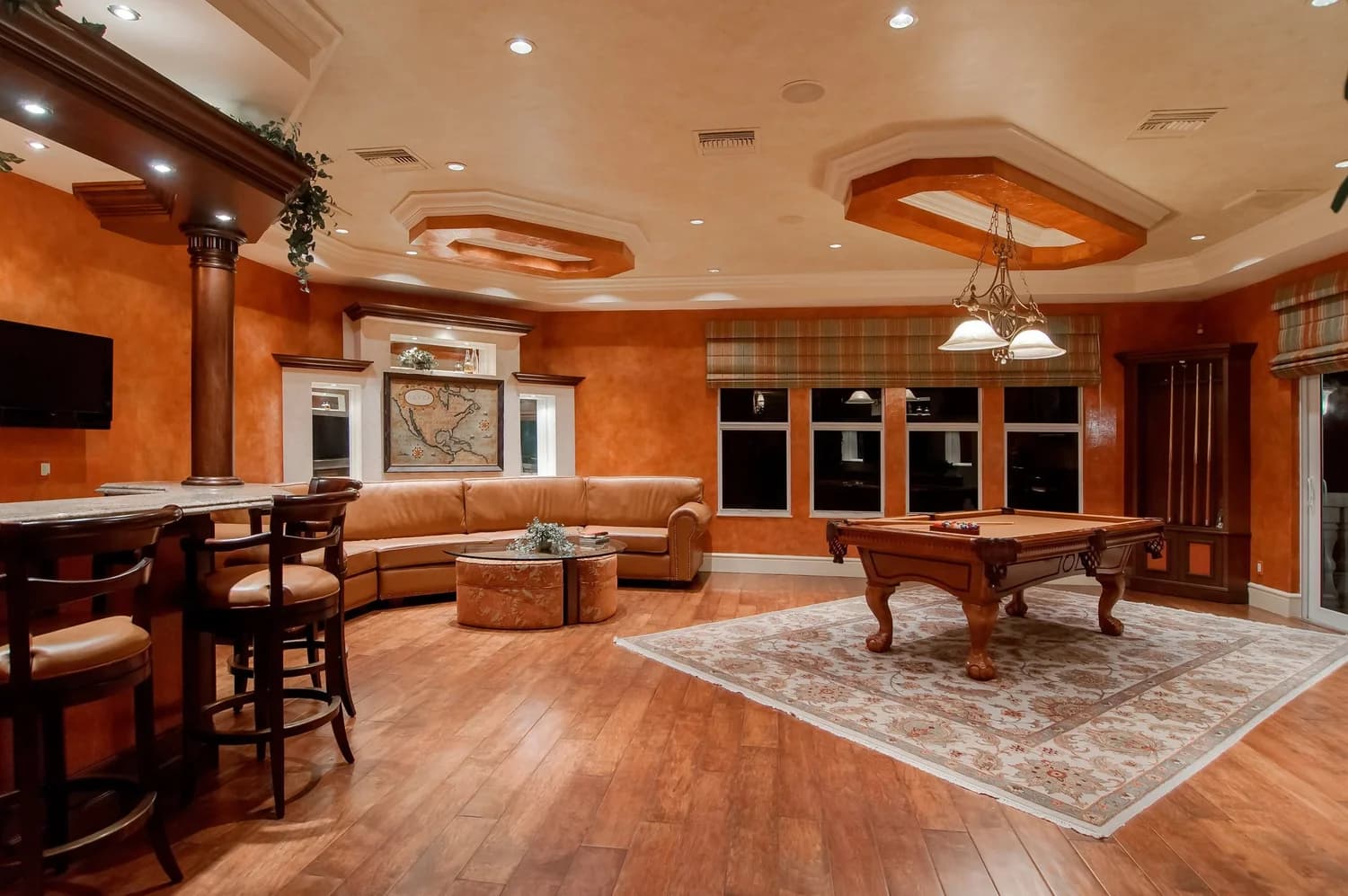
Types of Wood Flooring
Wood floors come in a variety of styles to meet the demands of today's busy lifestyles — factory finished, unfinished, solid, engineered, strip, plank, parquet, and acrylic impregnated. Choosing the style that is best for you is an important decision, and will be based on your lifestyle, your decorating style, and the area in which you live. Consider consulting with a wood flooring professional to weigh the advantages of each alternative.
Solid Hardwood
Milled from a single piece of wood, solid hardwood is the traditional choice. Available in strips (under 3" wide) and planks (3" or wider), it can be sanded and refinished many times over its lifetime. Best for above-grade installations.
Engineered Hardwood
Made of multiple wood layers with a hardwood veneer on top, engineered wood offers greater stability and can be installed at any grade level, including basements. It resists moisture and temperature changes better than solid wood.
Prefinished Flooring
Factory-finished with multiple coats of durable finish, prefinished flooring is ready to walk on immediately after installation. The factory finish is typically harder and more consistent than site-applied finishes.
Unfinished Flooring
Installed raw and finished on-site, unfinished flooring allows for completely custom stain colors and a seamless finish across the entire floor. This option is ideal when matching existing floors or creating a unique look.
Wide Plank
Planks 5" or wider create a distinctive, elegant look that showcases the natural beauty and character of the wood grain. Wide plank flooring is available in both solid and engineered options.
Parquet
Geometric patterns created from small pieces of hardwood, parquet flooring adds a decorative element to any room. From classic herringbone to intricate medallions, parquet offers endless design possibilities.
Hand Scraped
A surface treatment that gives flooring a rustic, aged appearance. Each board is uniquely textured by hand (or machine-simulated), creating a floor with old-world character and charm.
Colors
Wood floors come in a rainbow of colors to fit any decor. You can achieve unique, one-of-a-kind looks with custom stains and finishes. Even if your floor is old, you can achieve an entirely new look with new stain and finishes — the possibilities are endless.
Species
Today's wood floors come in more than 50 species, both domestic and exotic, spanning the spectrum of color options, hardness, and price ranges. No matter what look you want to achieve, there are a variety of species to meet your needs.
Domestic Species
Ash White, Beech, Birch, Cherry (Black), Douglas Fir, Hickory-Pecan, Maple Sugar/Hard, Mesquite, Oak (Red), Oak (White), Pine (Antique Heart), Pine (Southern Yellow), and Walnut (American Black).
Imported Species
Bamboo, Brazilian Cherry, Bubinga, Cork, Curmaru, Cypress (Australian), Spotted Gum, Sydney Blue Gum, Iroko, Jarrah, Santos Mahogany, Brazilian Maple, Merbau, Tasmanian Oak, Padauk, Purpleheart, Sapele, Brazilian Teak, Thai-Burmese Teak, Brazilian Walnut (Ipe), and Wenge.
Grades
The appearance of the wood determines its grade. All grades are equally strong and serviceable, but each affords a different look. Clear grade is free of defects with only minor imperfections. Select grade is almost clear but contains some natural characteristics such as knots and color variations. No. 1 Common has a variegated appearance with light and dark colors, knots, flags, and wormholes. No. 2 Common is rustic in appearance and emphasizes all wood characteristics of the species.
Cuts
The angle at which a board is cut determines how the finished product looks. Plain-sawn is the most common cut, with more variation because grain patterns from growth rings are more obvious. Quarter-sawn produces fewer board feet per log and is more expensive, but twists and cups less and wears more evenly. Rift-sawn is similar to quarter-sawing but the cut is made at a slightly different angle.